Meta Description: Minimalist Modern Home Design Ideas for a Clean, Stylish Space. Discover simple decorating tips, modern interiors, affordable designs, and smart ways to create a beautiful home.
A beautiful home doesn’t need expensive furniture, complicated decorations, or crowded rooms. Sometimes, the simplest spaces create the most comfortable and attractive living environments. That’s why minimalist design has become increasingly popular among homeowners and interior design enthusiasts.
Minimalist modern home design focuses on simplicity, functionality, natural beauty, and carefully selected decorations. It combines clean architectural lines, neutral colors, comfortable furniture, and practical layouts to create an environment that feels peaceful and organized.
Whether you live in a small apartment, a modern townhouse, or a large family home, minimalist design can help you make better use of your space. You don’t have to remove everything or spend thousands of dollars. Instead, you can make thoughtful choices that improve the appearance and functionality of your home.
In this guide, you’ll discover practical minimalist modern home design ideas for a clean, stylish space. We’ll explore different rooms, color combinations, furniture choices, storage solutions, and affordable decorating techniques that can help transform your living environment.
Understanding Modern Minimalist Home Design
Modern minimalist home design is an interior and architectural style that focuses on simplicity without sacrificing comfort or beauty.
The main idea is simple: keep what you need, remove unnecessary clutter, and give every element a clear purpose.
Unlike traditional interiors that may use heavy furniture, detailed patterns, and decorative accessories, minimalist homes usually feature open layouts, simple furniture, and balanced color combinations.
However, minimalism doesn’t mean your home must look empty or boring. A thoughtfully designed minimalist space can feel warm, welcoming, and full of personality.
What Makes a Home Minimalist?
A minimalist home is built around a few important principles.
1. Simple design
Furniture, walls, ceilings, and decorative elements usually have clean shapes and uncomplicated designs.
2. Functional furniture
Every piece of furniture should serve a useful purpose. A coffee table can provide storage, while a sofa bed can offer an additional sleeping space.
3. Neutral colors
White, beige, cream, gray, and soft earthy shades are commonly used to create a calm atmosphere.
4. Organized spaces
Storage areas help keep everyday objects out of sight, making rooms look cleaner and more spacious.
5. Natural materials
Wood, stone, cotton, linen, and other natural materials add warmth and texture.
The goal is to create a home where every element works together instead of competing for attention.
Benefits of Minimalist Interior Design
Minimalist interiors offer several practical benefits beyond their attractive appearance.
| Benefit | How It Helps |
|---|---|
| Less clutter | Creates a cleaner living environment |
| Better organization | Makes everyday items easier to find |
| Open appearance | Helps rooms feel larger |
| Timeless style | Reduces the need for frequent decorating changes |
| Easier maintenance | Fewer unnecessary objects mean less cleaning |
| Better functionality | Encourages thoughtful furniture choices |
Another important advantage is flexibility. Minimalist interiors can work with different architectural styles, including contemporary, Scandinavian, industrial, and modern farmhouse designs.
For example, a simple white living room can look completely different when combined with natural oak furniture, black metal details, or warm beige fabrics.
Essential Elements of a Minimalist Home
Creating an attractive minimalist home requires more than simply removing unnecessary decorations. You need to understand how colors, materials, furniture, lighting, and space work together.
Here are the essential elements that can help you achieve a balanced interior.
Neutral Color Palettes
Color is one of the most important parts of minimalist interior design.
Neutral shades create a peaceful background and allow furniture, textures, and architectural features to stand out.
Popular minimalist color choices include:
- White: Creates a fresh and open appearance.
- Beige: Adds warmth without making the room feel crowded.
- Light gray: Provides a modern and balanced atmosphere.
- Cream: Creates a soft and welcoming environment.
- Taupe: Introduces subtle depth and sophistication.
- Earthy brown: Connects indoor spaces with natural materials.
You don’t have to use only one color. Instead, combine two or three complementary shades.
For example, white walls, beige curtains, and light wooden furniture can create a beautiful modern living room.
If you prefer a slightly darker appearance, consider charcoal accents, black lighting fixtures, or dark wood furniture.
The important thing is to maintain balance.
Natural Materials and Textures
Natural materials are an excellent way to make minimalist interiors feel comfortable rather than cold.
Wood is particularly popular because it adds warmth and character. Light oak, walnut, bamboo, and natural timber can work beautifully in modern homes.
Other useful materials include:
- Natural stone countertops.
- Linen curtains.
- Cotton cushions.
- Wool rugs.
- Ceramic decorative pieces.
- Rattan furniture.
- Textured plaster walls.
Mixing different textures makes a simple room more interesting.
For instance, imagine a cream-colored sofa placed against a warm white wall, with a wooden coffee table and a soft wool rug. The color palette remains simple, but the different materials create visual depth.
Functional and Simple Furniture
Furniture should improve the way you use a room.
Instead of purchasing several decorative pieces, choose a few practical items that match your lifestyle.
Consider these options:
| Furniture | Why It’s Useful |
|---|---|
| Low-profile sofa | Creates a clean modern appearance |
| Floating shelves | Saves floor space |
| Extendable dining table | Provides flexibility |
| Storage bed | Offers hidden storage |
| Nesting tables | Can be arranged when needed |
| Modular sofa | Adapts to different room layouts |
Avoid furniture that is too large for your room. Oversized sofas, heavy cabinets, and unnecessary tables can make even a spacious interior feel crowded.
Before purchasing anything, measure your available space and consider how people will move around the room.
Lighting and Open Spaces
Lighting plays an important role in minimalist design.
Natural daylight can make rooms feel larger, brighter, and more welcoming. Whenever possible, avoid blocking windows with heavy furniture or thick curtains.
For artificial lighting, combine different sources:
- Ceiling lights for general illumination.
- Floor lamps for reading areas.
- Wall lights for decorative accents.
- Under-cabinet lighting for kitchens.
- Bedside lamps for bedrooms.
Warm white lighting can create a comfortable atmosphere in living rooms and bedrooms.
Another useful technique is to keep the layout open. Avoid unnecessary partitions and bulky furniture arrangements that interrupt movement.
A well-planned space feels more organized even when it contains all the furniture needed for everyday life.
Minimalist Modern Home Design Ideas for Every Room
Every room has different requirements. A living room needs comfortable seating, a kitchen needs practical work surfaces, and a bedroom should support relaxation.
The following room-by-room ideas can help you create a consistent minimalist style throughout your home.
Minimalist Living Room
The living room is often the central gathering place in a home. It should feel comfortable, attractive, and easy to maintain.
Start with a simple furniture arrangement.
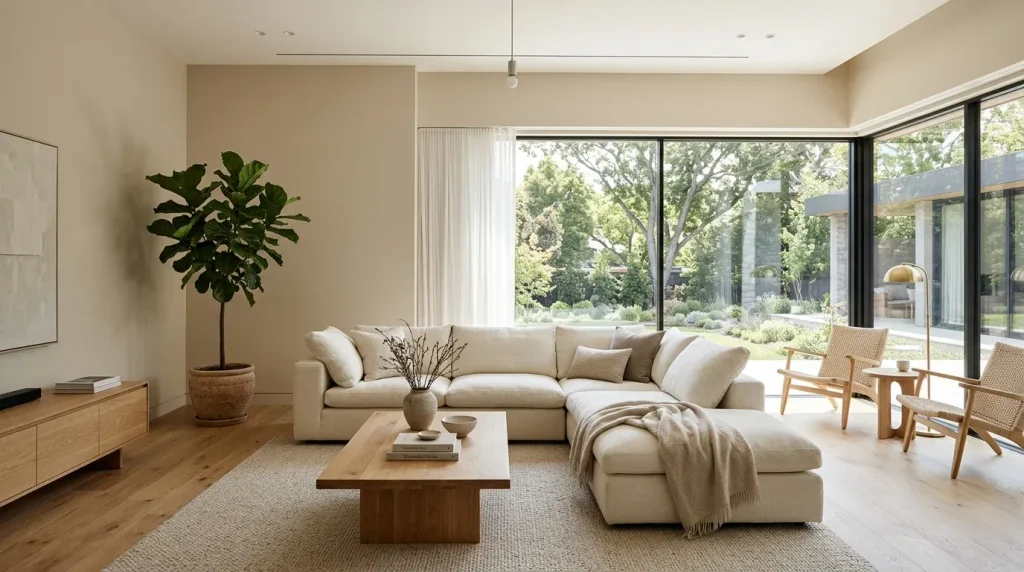
Choose a neutral sofa with clean lines and pair it with a wooden or stone coffee table. Add a soft rug to define the seating area.
Some useful ideas include:
- Use a neutral-colored sofa as the main feature.
- Choose a simple coffee table with practical storage.
- Add one large piece of artwork instead of several small decorations.
- Use floor-length curtains in a soft neutral shade.
- Introduce one or two indoor plants.
- Keep shelves organized with carefully selected objects.
- Use a simple floor lamp to create a comfortable evening atmosphere.
Don’t place furniture against every wall simply to fill the room. Leave enough open space for movement.
A large mirror can also help reflect natural light and create the impression of a bigger room.
Design tip: A combination of warm white walls, beige upholstery, light oak furniture, and natural greenery creates a timeless minimalist living room.
Modern Minimalist Kitchen
A minimalist kitchen should look clean while remaining practical for everyday cooking.
Cabinetry with flat fronts, simple handles, and integrated storage can create a smooth appearance.
Consider these design ideas:
- Install handleless cabinets for a seamless look.
- Choose white, cream, or light wood cabinetry.
- Use simple countertops with subtle patterns.
- Keep frequently used kitchen tools accessible.
- Store rarely used appliances inside cabinets.
- Install under-cabinet lighting.
- Choose simple faucets and hardware.
An open kitchen can also benefit from a clean breakfast counter or a small island.
However, the layout should always support efficient movement between the sink, refrigerator, and cooking area.
Avoid filling countertops with unnecessary appliances and decorations. A clear working surface makes the kitchen easier to use and maintain.
Simple and Comfortable Bedroom
A minimalist bedroom should feel peaceful and relaxing.
Start with a comfortable bed that has a simple headboard and neutral bedding.
White, beige, soft gray, and muted green are excellent bedroom color choices.
You can improve the design with:
- Simple bedside tables.
- Warm bedside lighting.
- Soft cotton or linen bedding.
- Built-in wardrobes.
- Minimal wall decorations.
- A small area rug.
- Hidden storage solutions.
Avoid placing too many decorative objects near the bed. A clean bedside table with a lamp and one useful item is often enough.
If your bedroom is small, consider a bed with built-in drawers. This provides additional storage without requiring another large cabinet.
Minimalist Bathroom
Bathrooms can also benefit from minimalist design principles.
A clean bathroom should be easy to maintain, visually balanced, and practical.
Some effective ideas include:
- Use white or light beige tiles.
- Install a floating vanity.
- Choose simple mirrors.
- Use concealed storage for toiletries.
- Select modern chrome or matte black fixtures.
- Keep countertops free from unnecessary products.
- Add soft lighting around the mirror.
Natural stone or wood-look finishes can make a bathroom feel more luxurious.
If the bathroom is small, a frameless glass shower enclosure can help maintain an open appearance.
Remember that waterproof materials and proper ventilation are more important than decorative appearance.
Small Home Design Ideas
Small homes and apartments can look stylish without expensive renovations.
In fact, minimalist principles are particularly useful in limited spaces because they encourage smart layouts, practical furniture, and better organization.
The secret is to make every square foot useful.
Space-Saving Furniture
Large furniture pieces can quickly overwhelm a small room.
Instead, choose compact furniture that offers more than one function.
Examples include:
- Sofa beds for guest rooms.
- Folding dining tables.
- Wall-mounted desks.
- Storage ottomans.
- Extendable dining furniture.
- Foldable chairs.
- Beds with built-in drawers.
A small dining area can use a round table with lightweight chairs. This arrangement allows easier movement compared with a large rectangular table.
Likewise, a wall-mounted desk can create a useful workspace without taking up too much floor area.
Smart Storage Solutions
Storage is essential for maintaining a clean minimalist home.
Without proper storage, everyday objects can quickly create visual clutter.
Try these solutions:
1. Vertical storage
Use wall-mounted shelves and tall cabinets to make better use of unused wall space.
2. Hidden storage
Choose beds, benches, and coffee tables with built-in storage compartments.
3. Organized wardrobes
Use drawer dividers, storage boxes, and hanging organizers to arrange clothing.
4. Under-bed storage
Store seasonal clothing, extra bedding, or other less frequently used belongings beneath the bed.
5. Multi-purpose furniture
Choose furniture that performs two or more functions.
You should also regularly review your belongings. Donate, recycle, or responsibly dispose of items you no longer use.
A useful rule is to keep everyday essentials accessible and store occasional items separately.
Affordable Minimalist Home Decoration
You don’t need a large budget to create a modern minimalist home.
In many cases, the biggest improvements come from better organization, thoughtful furniture placement, and a simple color scheme.
Before purchasing new decorations, look at what you already own.
A few carefully planned changes can make a noticeable difference.
Budget-Friendly Decorating Tips
Here are some affordable ways to improve your home:
| Idea | Budget-Friendly Approach |
|---|---|
| Wall design | Repaint walls in neutral colors |
| Living room | Rearrange existing furniture |
| Bedroom | Replace busy bedding with simple colors |
| Lighting | Use affordable warm LED bulbs |
| Decoration | Display a few meaningful objects |
| Storage | Use baskets and organizers |
| Plants | Introduce low-maintenance indoor plants |
| Curtains | Choose simple, lightweight fabrics |
You can also update old furniture rather than replacing everything.
For example, repainting a wooden side table or changing cabinet handles can give an old piece a more modern appearance.
DIY projects are another affordable option. You can create simple wall art, organize shelves, or reuse wooden furniture.
However, don’t purchase decorations simply because they look attractive online. Consider whether each item fits your space and serves a useful purpose.
Common Decorating Mistakes
Even a well-intentioned design project can become less effective when certain mistakes are repeated.
Here are some common problems to avoid:
Using too much white: An entirely white room can feel cold. Add wood, fabric, and warm neutral shades to introduce comfort.
Choosing oversized furniture: Large furniture can restrict movement and make a small room feel crowded.
Ignoring lighting: Poor lighting can make even beautiful interiors look uncomfortable.
Buying unnecessary decorations: Too many accessories can weaken the clean appearance of minimalist spaces.
Forgetting functionality: A room should support everyday activities rather than focus only on appearance.
Following trends without planning: Not every popular interior trend suits every home. Choose designs that match your needs, available space, and budget.
How to Create a Warm and Stylish Minimalist Home
The most successful minimalist interiors balance simplicity with personality.
A home should not feel like an empty showroom. It should reflect the people who live there.
You can achieve this by combining clean design with personal details.
For example, display a favorite photograph, a meaningful artwork, or a handmade ceramic object.
Indoor plants can also introduce color and natural beauty without making the space feel crowded.
Warm minimalism is another excellent approach. It combines traditional minimalist principles with natural materials, softer colors, and comfortable textures.
Here is a simple step-by-step process:
Step 1: Evaluate your current space
Look at each room and identify unnecessary furniture, decorations, and objects that create clutter.
Step 2: Select a consistent color palette
Choose two or three main colors that work throughout your home.
Step 3: Focus on essential furniture
Keep furniture that supports your everyday activities. Remove pieces that take up space without providing value.
Step 4: Improve lighting
Make better use of daylight and add suitable artificial lighting.
Step 5: Introduce natural textures
Use wood, linen, cotton, stone, and plants to make rooms feel comfortable.
Step 6: Organize storage
Give everyday belongings a designated place so surfaces remain clean.
Step 7: Add personal details
Finish with a few meaningful decorative elements that express your personality.
For additional information about creating healthier indoor environments, explore the US Environmental Protection Agency’s Indoor Air Quality resources.
Remember that good design is not about following strict rules. It’s about creating a comfortable environment that works for your lifestyle.
Frequently Asked Questions
1. What is minimalist modern home design?
Minimalist modern home design is a style that combines simple furniture, clean architectural lines, neutral colors, natural materials, and functional layouts. Its main goal is to create attractive, organized, and comfortable living spaces without unnecessary decorations.
2. How can I make my home look minimalist?
Start by removing unnecessary clutter and choosing a simple color palette. Use functional furniture, organize your belongings, improve lighting, and introduce natural materials. You don’t need to replace everything to achieve a minimalist appearance.
3. Which colors are best for minimalist interiors?
White, beige, cream, light gray, taupe, and earthy brown are popular choices. These shades create a calm background and work well with natural wood, stone, and neutral fabrics.
4. Is minimalist design suitable for small houses?
Yes. Minimalist design works particularly well in small houses because it emphasizes open spaces, practical furniture, and smart storage. Multi-purpose furniture and light colors can also help smaller rooms feel more spacious.
5. How can I decorate a minimalist home on a low budget?
You can start by rearranging existing furniture, repainting walls, organizing storage, and using affordable neutral-colored fabrics. Adding a few plants or creating simple DIY decorations can also improve the appearance without requiring expensive purchases.
6. What is warm minimalist interior design?
Warm minimalism combines simple layouts with comfortable materials and soft colors. It often uses natural wood, linen, textured fabrics, beige shades, and warm lighting to create a welcoming environment.
7. What furniture is best for a minimalist home?
Furniture with clean lines, simple shapes, and practical functions works best. Examples include modular sofas, storage beds, floating shelves, extendable tables, and compact cabinets.
8. How can I make a minimalist living room look luxurious?
Choose high-quality-looking materials, comfortable furniture, layered lighting, and a balanced color palette. A large artwork, elegant curtains, natural wood, and carefully selected accessories can create a sophisticated appearance without overcrowding the room.
9. Does minimalist design mean having fewer belongings?
Not necessarily. Minimalism encourages people to keep useful and meaningful belongings while reducing unnecessary clutter. The goal is to create an organized space that supports comfortable daily living.
10. Is minimalist home design still popular?
Minimalist design remains an influential approach to modern interiors. Its emphasis on functionality, timeless materials, organized spaces, and comfortable environments makes it suitable for many different homes and lifestyles.
Conclusion
Creating a beautiful home doesn’t require complicated decorations or expensive furniture. The right combination of simple layouts, natural materials, comfortable furniture, and thoughtful lighting can transform almost any living space.
The best minimalist modern home design ideas focus on making everyday life easier while maintaining a clean and attractive appearance.
Whether you’re decorating a small apartment, renovating a family house, or simply updating one room, start with small improvements. Choose a balanced color palette, organize your belongings, invest in practical furniture, and add personal details that make your home feel welcoming.
Most importantly, remember that minimalism is not about having an empty home. It’s about making room for the things that truly matter.